Hugo Schwarz · 29 October 2026
Digital archives reshape how remote groups validate and exchange kava variant records through peer-reviewed online utilities
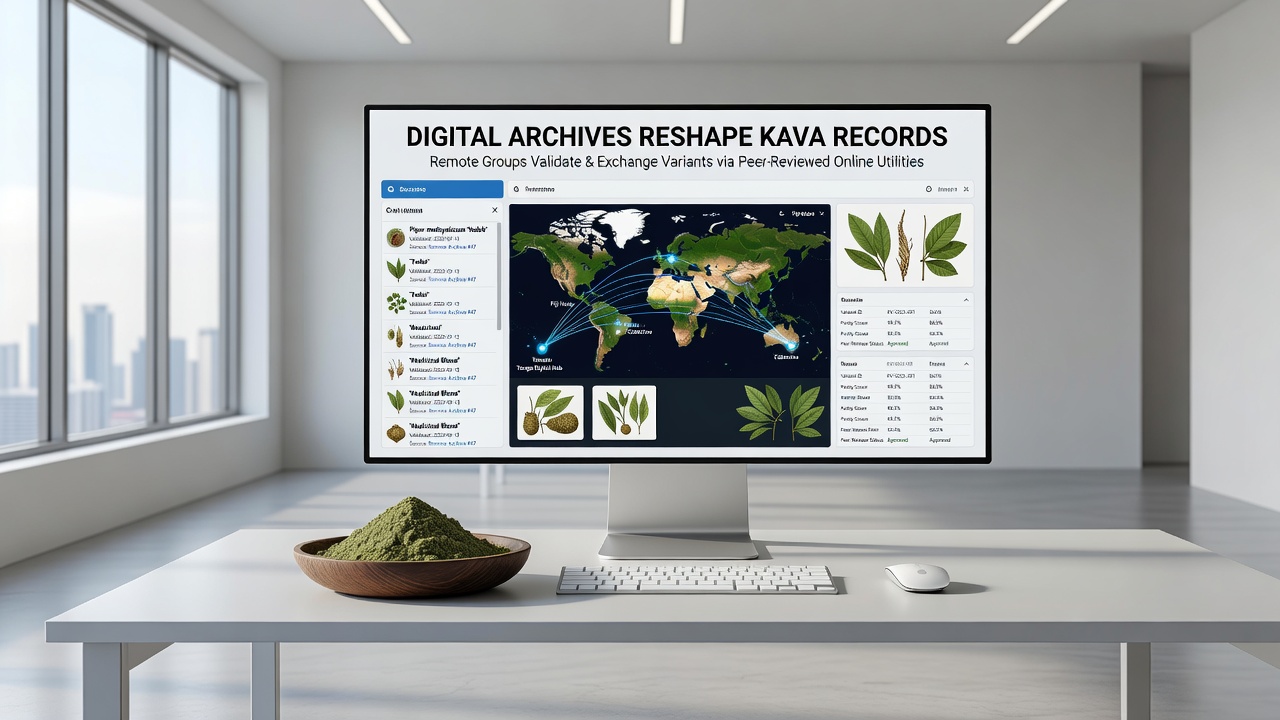
Digital archives have altered the methods remote groups employ when they validate and exchange records of kava variants, and peer-reviewed online utilities now serve as central mechanisms for these activities. Groups located across Pacific islands and diaspora communities upload botanical descriptions, chemical profiles, and traditional preparation notes to shared repositories where other users review submissions before they receive formal acceptance into the archive.
Core functions of peer-reviewed utilities
These utilities require contributors to submit evidence that meets defined criteria such as genetic sequencing data, soil composition reports, and documented lineage from recognized cultivation sites. Reviewers drawn from academic institutions and community knowledge holders examine each entry for consistency with existing records, and accepted contributions receive timestamps along with unique identifiers that link back to source materials. In October 2026 several platforms introduced automated cross-referencing tools that compare new submissions against herbarium specimens held at institutions in Australia and New Zealand, which reduced duplicate entries by measurable percentages according to usage logs released by the hosting organizations.
Validation processes for variant records
Remote groups initiate validation by attaching field photographs, GPS coordinates, and witness statements to each record, while the utility systems flag any discrepancies for additional verification rounds. Multiple reviewers must reach consensus before a record moves from provisional status to the permanent archive, and this multi-step approach has produced datasets that researchers at several universities now cite when they publish ethnobotanical studies. Data compiled through these platforms shows that groups in Vanuatu and Fiji have contributed the largest shares of variant profiles, followed by entries from Hawaii and Samoa.
Exchange mechanisms across distances
Once validated, records become accessible through search interfaces that allow users to filter by chemical markers, growth altitude, or ceremonial significance, and authorized participants can request direct transfers of associated metadata for local use. Secure channels within the utilities enable groups to share full datasets without exposing sensitive cultural knowledge to public view, and access logs indicate steady increases in downloads from locations outside traditional growing regions. Observers note that these exchanges occur without the need for physical transport of plant material, which aligns with biosecurity regulations enforced by multiple national agencies.
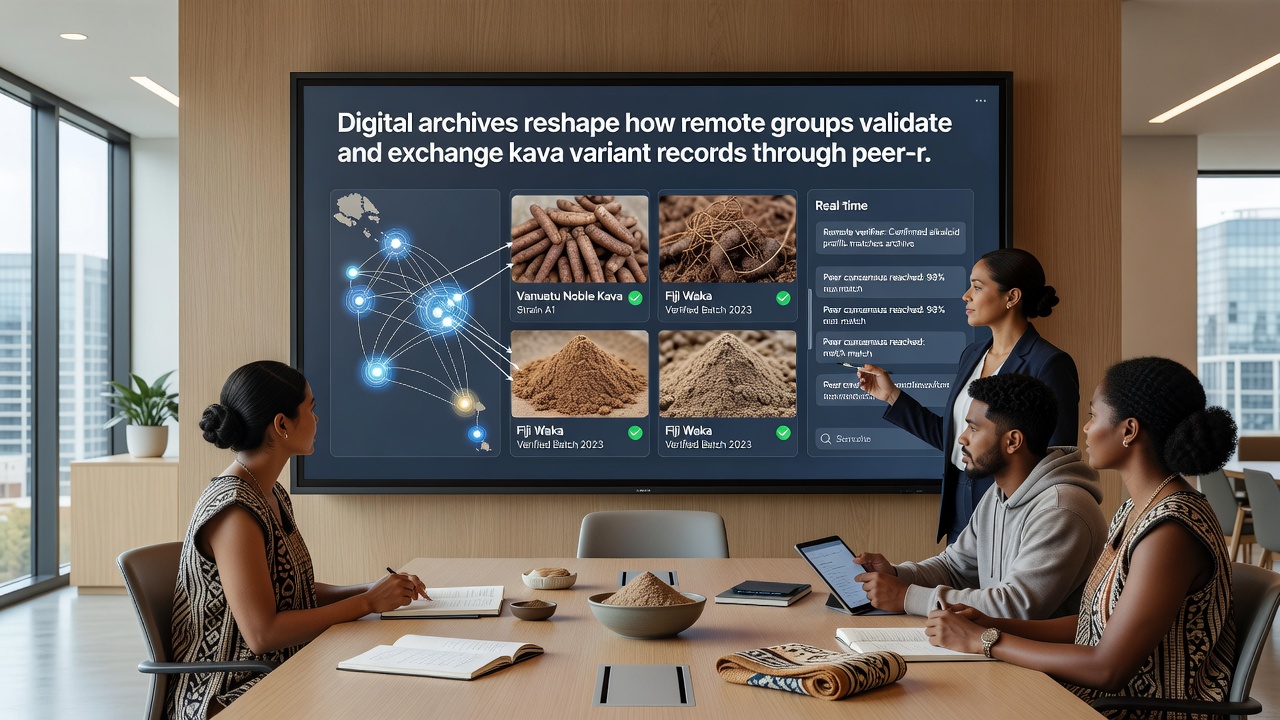
Community networks maintain private channels alongside the public utilities, adn members coordinate updates so that newly validated information reaches all participants within agreed timeframes. Records exchanged through these systems include details on variant resistance to specific pests, seasonal yield variations, and compatibility with different soil types, which groups then apply when they plan seasonal plantings or respond to environmental changes.
Integration with existing knowledge systems
Many remote groups combine the digital records with longstanding oral transmission practices, and they schedule periodic gatherings where elders review printed summaries of archive entries before approving wider distribution. This hybrid method preserves the authority of local knowledge holders while incorporating the precision offered by digital verification tools. Studies conducted by research teams at institutions in Canada and the European Union have tracked how these combined approaches affect the accuracy of variant identification over multiple growing cycles.
Technical features supporting remote access
Utilities incorporate offline caching functions so that communities with intermittent connectivity can continue reviewing and annotating records, and synchronization occurs automatically when connections resume. Encryption standards protect the integrity of each submission during transfer, and audit trails document every edit or comment added during the review process. Platform operators publish annual transparency reports that list the number of records processed, the geographic distribution of contributors, and the average time required for full validation cycles.
Groups also utilize mapping layers within the utilities to overlay variant locations onto regional climate data, which assists in identifying areas suitable for expanding cultivation of particular strains. These layers draw from public meteorological sources and integrate with satellite imagery provided through agreements with space agencies in multiple countries.
Conclusion
Digital archives and their associated peer-reviewed utilities have established structured pathways for remote groups to validate and exchange kava variant records, and ongoing platform developments continue to refine the speed and reliability of these exchanges. Records maintained through these systems supply researchers and community practitioners with consistent reference materials that support both preservation efforts and practical cultivation decisions across dispersed locations.