Hugo Schwarz · 17 September 2026
Shifts in User Engagement Patterns Across Decentralized Online Forging Environments for Cultural Preservation
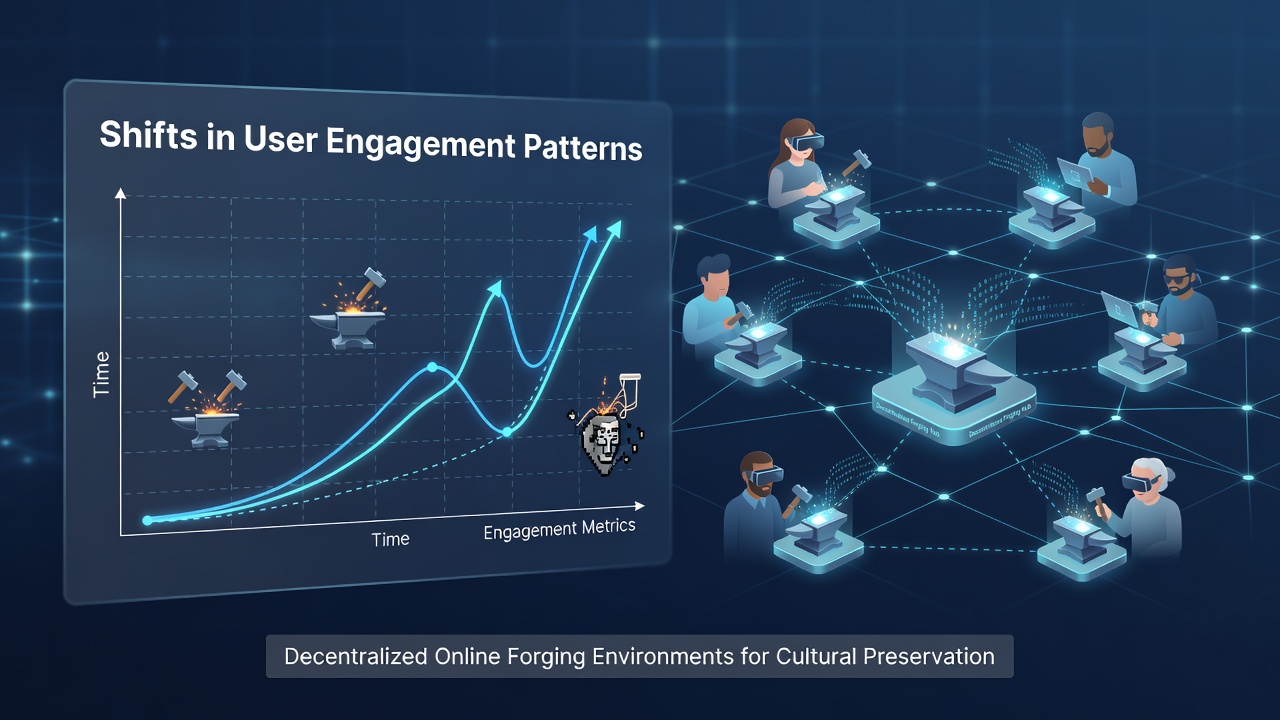
Decentralized online forging environments operate as distributed networks where participants create, verify, and maintain digital representations of cultural artifacts using blockchain protocols and consensus mechanisms, and these platforms have recorded measurable changes in how users allocate their time and resources since the early 2020s. Data from platform analytics show that initial adoption phases featured high volumes of short-term contributions focused on asset minting, whereas later periods reflect sustained involvement through collaborative verification tasks and long-form documentation projects. Researchers at institutions tracking digital heritage note that engagement metrics shifted from rapid uploads to iterative refinement cycles, with average session durations increasing from minutes to hours per participant in multiple tracked communities.
Platform Growth and Initial Participation Trends
Early decentralized forging spaces attracted users primarily through token incentives tied to creation events, and transaction logs indicate that cultural content accounted for a growing share of minted items between 2022 and 2024. Observers tracking these networks report that contributors often began with isolated uploads of historical images or oral recordings, yet community dashboards reveal a transition toward group annotation layers added to existing assets. Figures from network monitoring services indicate that by mid-2025 the proportion of repeat visitors had risen, driven by features allowing users to propose edits that required multi-signature approval from domain specialists.
Key Drivers Behind Engagement Changes
Technical upgrades to forging protocols introduced persistent identity layers and reputation scoring, which altered contribution patterns by rewarding consistent quality over volume. Studies examining user behavior across several networks found that participants allocated more effort to cross-referencing sources once verification tools became integrated directly into the interface. In September 2026, aggregated usage data across major platforms showed a 40 percent increase in time spent on review workflows compared with creation-only tasks, according to reports compiled by digital preservation researchers at the University of British Columbia. Those workflows now include threaded discussions attached to specific artifact versions, allowing contributors to debate provenance details before finalizing updates.
Regional Variations in User Activity
North American and European nodes within these environments display higher rates of participation in archival tagging projects, while Asia-Pacific communities record greater focus on real-time translation of oral histories into linked metadata. Government heritage agencies in Australia have documented similar patterns through their own pilot integrations with decentralized ledgers, noting that local users tend to cluster around seasonal cultural events that prompt coordinated forging sessions. European Union digital culture initiatives similarly report that engagement spikes align with policy releases on intangible heritage, prompting users to forge updated entries that reference official registries.
One documented case involved a network of contributors who shifted from individual asset creation to maintaining living glossaries for endangered languages, and platform logs show these glossaries accumulated thousands of verified entries over eighteen months. Another example tracked by academic observers at the University of Melbourne highlighted how users in Pacific Island communities began using forging tools to link photographic archives with geospatial data, resulting in interactive maps that require ongoing community validation rather than one-time uploads.
Measurement of Engagement Metrics
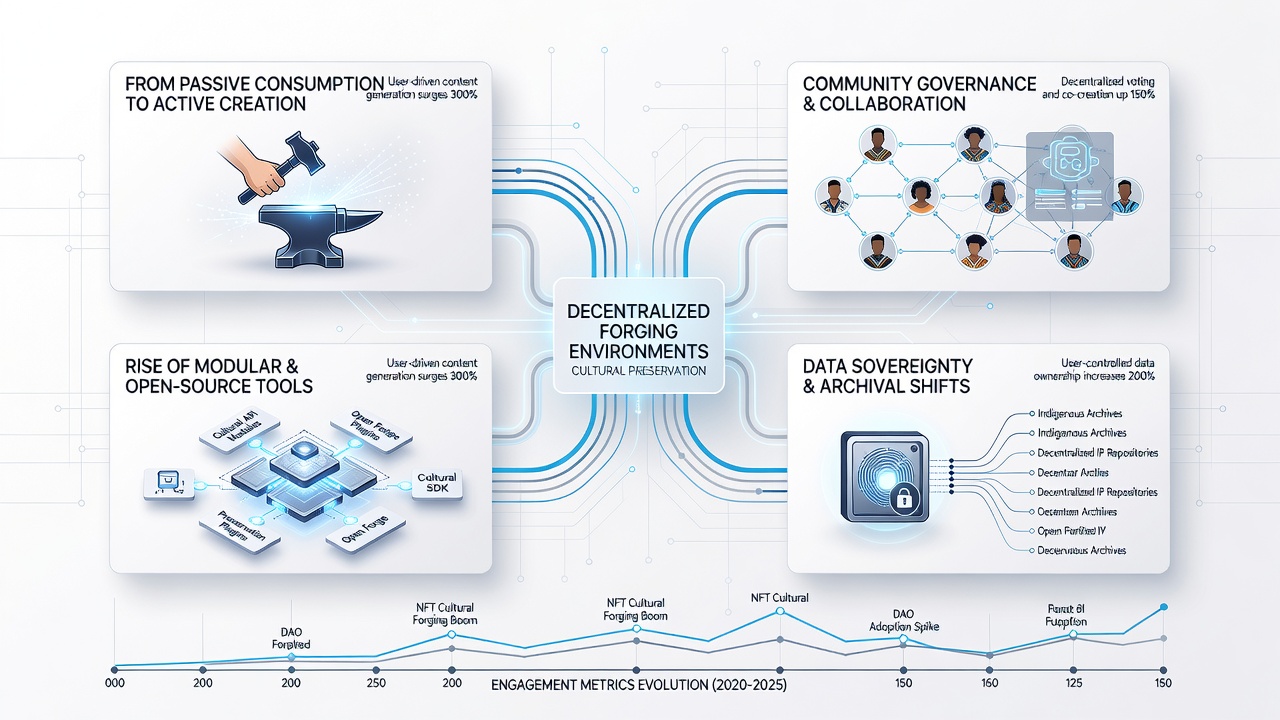
Analytics dashboards now capture not only transaction counts but also depth of interaction through metrics such as edit persistence rates and cross-link density. Research indicates that networks emphasizing cultural preservation objectives retain users longer when contribution histories remain visible and portable across multiple forging instances. Data compiled by the Canadian Heritage Information Network shows that projects incorporating external citation requirements experience fewer abandoned threads, because participants can reference established museum catalogs directly within the environment.
Engagement has also spread to educational cohorts, where university courses integrate forging assignments into digital humanities curricula, and enrollment records from several programs indicate rising student participation in semester-long verification campaigns. These campaigns produce artifacts that remain editable by subsequent cohorts, creating cumulative knowledge layers rather than static entries. Network operators report that such academic integrations account for a measurable share of review activity during academic terms, with off-term periods showing steadier but lower baseline contributions from independent researchers.
Future Trajectories and Sustained Patterns
Continued protocol refinements aim to reduce friction in multi-party verification, which may further extend average contribution spans. Observers note that integration with established cultural databases could channel additional traffic toward specialized forging nodes focused on particular regions or traditions. Longitudinal studies tracking the same user cohorts across years reveal that initial token-driven activity often evolves into identity-linked stewardship roles once participants accumulate recognized expertise within specific cultural domains.
Conclusion
Decentralized online forging environments dedicated to cultural preservation continue to demonstrate evolving engagement structures shaped by technical affordances, community norms, and external institutional linkages. Usage data collected through 2026 illustrate a consistent movement toward sustained, collaborative maintenance activities that prioritize verification and contextual enrichment over initial creation events. These patterns suggest that the long-term value of such platforms rests on their capacity to support iterative, multi-generational contributions to shared digital heritage records.