David Jenkins · 3 September 2026
Tracing the Evolution of Niche Online Utilities in Collaborative Environments
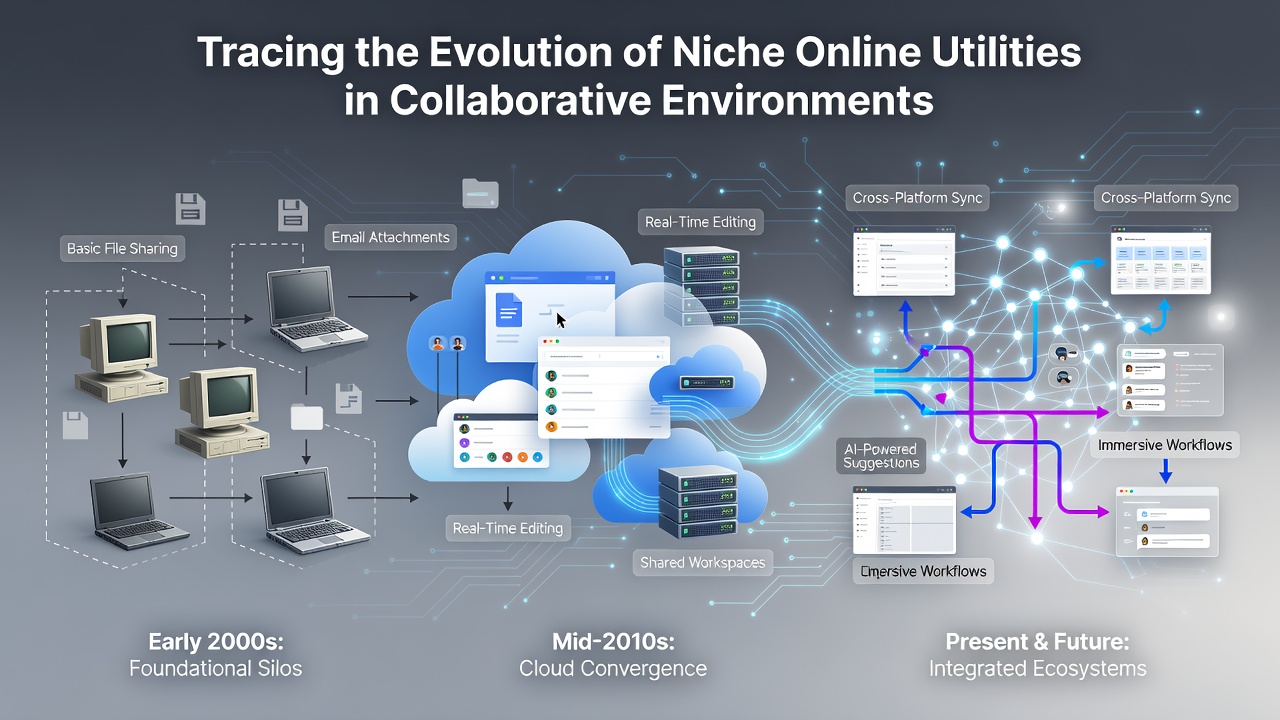
Collaborative environments have relied on specialized online utilities since the early days of networked computing, and these tools have shifted from basic text exchanges to integrated platforms that support distributed teams across industries. Researchers at institutions like the University of Toronto have documented how early bulletin board systems in the 1980s allowed small groups to share files and messages through dial-up connections, establishing patterns that later expanded with internet growth.
Foundations in Pre-Web Networks
Initial utilities focused on text-based interactions because bandwidth limitations restricted richer media, yet they enabled real-time coordination for hobbyist communities and academic projects. Data from the National Science Foundation shows that by the mid-1990s, listservs and Usenet groups handled millions of messages monthly, creating niche spaces for topics ranging from software debugging to scientific data sharing. These systems emphasized threaded discussions and versioned archives, features that persist in modern descendants.
Observers note that the transition to web interfaces in the late 1990s introduced HTML-based wikis and shared calendars, which removed the need for proprietary clients and broadened access. One study from the University of Melbourne tracked how wiki adoption in research consortia reduced email volume by 40 percent within participating groups between 1999 and 2003.
Expansion Through Web 2.0 Platforms
Web 2.0 technologies accelerated the creation of utilities tailored to specific workflows, such as collaborative coding environments and real-time document editors. Platforms like early versions of GitHub emerged around 2008, combining version control with social features that let distributed developers review changes and discuss issues in the same interface. Figures from industry reports indicate that such tools grew from handling thousands of repositories in their first year to over 100 million by 2020.
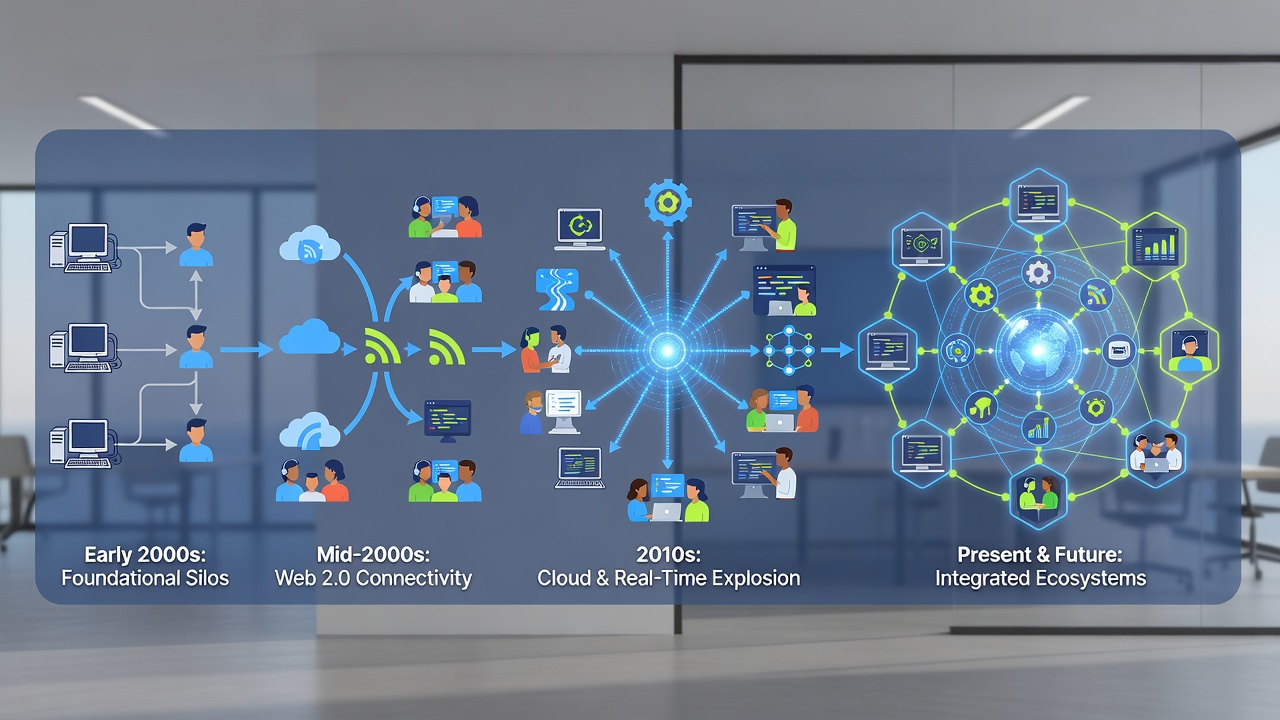
Specialized utilities continued to branch into vertical markets, including design review tools for architects and annotation systems for legal teams. European Commission analyses of digital workplace adoption reveal that between 2015 and 2022, usage of niche collaboration apps in EU member states increased by 65 percent, driven by remote work policies and cloud infrastructure improvements.
Integration and Specialization Trends
By the early 2020s, many utilities incorporated API connections that allowed seamless data flow between project management, communication, and analytics applications. This modular approach let organizations assemble custom stacks without building core features from scratch. Studies published in academic journals highlight cases where research labs combined shared lab notebook software with sensor data streams to coordinate experiments across continents.
In September 2026, ongoing developments include expanded support for asynchronous participation through AI-assisted summarization of long discussion threads and automated task routing based on team member availability patterns. Government statistics from Australia’s Digital Economy Agency indicate that collaborative utility usage in small and medium enterprises rose steadily through 2025, with niche tools accounting for a growing share of enterprise software spending.
Current Landscape and Data Patterns
Current utilities often embed security features such as granular permission controls and audit logs to meet regulatory requirements in sectors like healthcare and finance. Data compiled by research institutions shows that adoption rates vary by region, with North American organizations favoring rapid iteration tools while Asian markets emphasize mobile-first interfaces for field teams. These differences reflect infrastructure availability and cultural preferences for communication styles.
Case examples from published reports illustrate how open-source niche utilities have influenced proprietary offerings, leading to hybrid models that combine community contributions with enterprise support contracts. Observers have recorded steady growth in the number of domain-specific plugins available for major platforms, extending core functionality without requiring users to switch applications.
Conclusion
The evolution of these utilities demonstrates consistent adaptation to changing network capabilities and organizational needs. From early text systems to today’s interconnected environments, each stage has added layers of functionality while preserving core principles of shared access and version history. Continued refinement in areas such as cross-platform compatibility and data portability suggests further specialization ahead, supported by metrics that track both usage volume and integration depth across sectors.